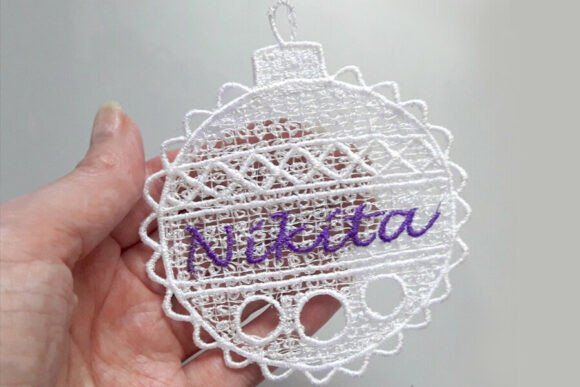
Review: FSL Christmas Ornament Embroidery Design
As an embroidery designer who has spent countless weekends behind a craft fair table, I know that the difference between a browser and a buyer often comes down to visual impact. When I first loaded the FSL Christmas Ornament Embroidery Design into my software, my immediate thought was not just about stitch quality, but about marketability. This is not merely a digital file; it is a potential revenue stream for your small shop. The concept of Free Standing Lace (FSL) ornaments is timeless, but the addition of a custom name element transforms it from a generic decoration into a personalized keepsake. For Etsy sellers and boutique makers, this distinction is crucial.
First Impressions and Aesthetic Appeal
The initial vibe of this design leans heavily toward the festive and premium end of the spectrum. FSL work inherently carries a delicate, lace-like quality that screams "handmade luxury." When you pair that intricate texture with the promise of customization, you create a product that feels both traditional and modern. It does not feel rustic or farmhouse in a rough-hewn way; rather, it feels elegant and decorative. In a crowded booth display, these ornaments catch the light differently than flat embroidered items. The translucency of the lace allows them to stand out against darker backdrops or velvet displays, drawing the eye immediately.
For craft fair sellers, understanding the mood is key. This design fits perfectly into a winter wonderland theme or a classic holiday aesthetic. It is bold enough to be seen from a few feet away but detailed enough to invite closer inspection. That dual nature is what drives engagement at a physical market.
Versatility Beyond the Tree
While the primary application is obvious—a hanging decoration for the Christmas tree—creative entrepreneurs should look broader. How does this machine embroidery design perform on other surfaces? If you are selling tote bags, aprons, or tea towels, this specific FSL design might be too structural for direct application on soft, drapey fabrics without heavy stabilization. However, it shines as a standalone craft fair product.
Consider using these ornaments as embellishments on larger items. Imagine a plain canvas market bag with one of these lace ornaments stitched onto a sturdy patch and then appliqued onto the bag. Or, think about gift sets. Pairing a simple embroidered tea towel with a matching FSL ornament creates a higher perceived value. For caps and curved surfaces, FSL is generally not recommended due to rigidity, so keep this design focused on flat or hanging applications where its structure can be appreciated without distortion.
Production Realities for Small Shops
From a production standpoint, batch processing is essential for profitability. This embroidery file appears to be designed for efficiency, but FSL always requires extra steps. You must use water-soluble stabilizer, which adds cost and time to your workflow. Before committing to a large run, you need to evaluate the stitch density. If the design is too dense, it becomes stiff and brittle; if too loose, it lacks definition. Test stitches on scrap fabric are non-negotiable here.
One major advantage for the Etsy seller is the photographic potential. FSL ornaments photograph beautifully because they have depth and texture. They do not look flat in online listings. Creating a printable mockup or high-quality digital asset for your shop is easier when the product has natural dimension. Ensure you check the hoop size requirements before purchasing. Since this is a custom name pattern, verify that the text area is large enough to be legible but small enough to fit within standard hoop dimensions commonly used by home embroiderers.
Critical Considerations for Quality Control
There are careful-use notes that every professional should heed. First, thread contrast matters. Using a monochromatic thread scheme can look sophisticated, but if the background is busy, the details may get lost. For a finished product intended for sale, high-contrast threads often pop better in photos and in person. Second, consider the fabric texture if you plan to attach these to other items. Thick fabrics like denim or canvas can support the weight of FSL, but delicate silks cannot.
Another point is the clarity of small lettering. Since this is a custom name design, ensure that the font chosen in the software remains readable at the final size. Tiny details in FSL can sometimes merge or break during the washing or handling process. Always inspect the bridge points in the lace structure. If they are too thin, the ornament may fall apart after minimal use. This affects your brand consistency and reputation for quality.
Maximizing Sales and Customer Engagement
How does this design affect your bottom line? Personalized items command a higher price point. A standard ornament might sell for ten dollars, but a named, custom FSL ornament can easily fetch twenty or more. This increases the average order value for your small shop product lineup. Furthermore, these make excellent add-on items at checkout. Customers buying a larger gift often look for small, meaningful extras.
For booth display strength, hang these ornaments at varying heights. Use lighting to highlight the lace texture. When customers see the intricacy up close, they understand the labor involved, which justifies the price. It also serves as a conversation starter, allowing you to explain the commercial embroidery process and the care taken in creating each piece.
Final Designer Notes
Before you list this as a digital embroidery file or start producing finished goods, take these practical steps. Confirm the commercial licensing terms explicitly. Not all designers allow unlimited sales of finished products, so read the fine print. Check the included formats to ensure compatibility with your specific machine brand. Review the spacing of the name field to ensure it accommodates longer names without shrinking the overall design disproportionately.
Create at least one real mockup in various thread colors. Gold and silver are traditional, but deep reds, forest greens, or even icy blues can appeal to different customer segments. Compare how these colors look against different background fabrics if you plan to sell them as part of a set. Finally, remember that while the design is compatible with all types of embroidery machines, your tension settings may need adjustment for FSL work. A slight tweak can mean the difference between a crisp, clean lace edge and a messy, tangled result.
In conclusion, the FSL Christmas Ornament Embroidery Design is a strong contender for your holiday inventory. It balances aesthetic appeal with production feasibility, provided you respect the technical requirements of free-standing lace. For handmade market products, it offers the personalization that buyers crave and the visual drama that stops traffic in a busy aisle. Treat it with the precision it deserves, and it will likely become a staple in your seasonal collection.