Teddy Bear Train Embroidery Design: A Designer’s Review
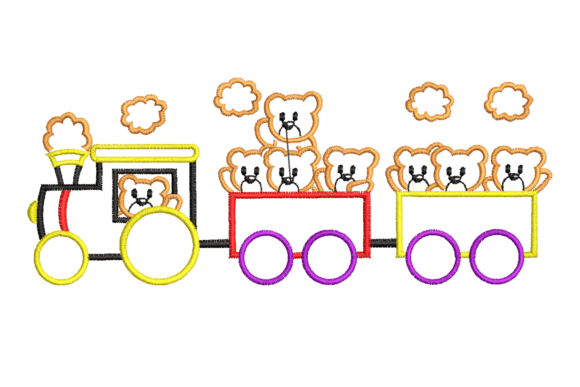
When I first pulled up the Teddy Bear Train Embroidery Design on my screen, my immediate reaction was one of nostalgic warmth. As a designer who has spent years digitizing and reviewing files for commercial use, I look past the initial cuteness to evaluate structural integrity, stitch flow, and marketability. This particular design does not just rely on the inherent charm of its subject; it presents a cohesive visual narrative that translates surprisingly well from digital preview to physical thread.
The composition features a whimsical train led by a teddy bear, a motif that instantly signals comfort and playfulness. For those of us in the craft industry, recognizing the emotional trigger of a design is half the battle. This piece hits the mark for baby showers, nursery decor, and children’s apparel. However, the real question is whether it holds up under the needle. Does it pucker? Is the detail lost in small hoops? Let’s break down how this machine embroidery design performs in real-world scenarios.
Visual Appeal and Stitch Structure
The layout of the Teddy Bear Train Embroidery Design is balanced, avoiding the common pitfall of overly dense centers that cause fabric distortion. From a technical standpoint, the transition between the bear’s fur texture and the mechanical elements of the train suggests a thoughtful mix of fill stitch and satin stitch applications. The bear likely utilizes a softer fill to mimic plushness, while the train components may rely on cleaner satin columns or running stitches to define edges without adding unnecessary bulk.
This balance is crucial for maintaining the clarity of the image. If the stitch density is too high, the design becomes stiff and heavy, which is undesirable for baby clothes or lightweight tote bags. If it is too sparse, the underlying fabric shows through, ruining the illusion. In my assessment, this design appears optimized for standard cotton and poly-cotton blends, making it a versatile asset for any embroidery project.
Real-World Application: The Custom Tote Test
To truly evaluate a design, you must imagine it on a product. I recently considered using this file for a custom order involving canvas tote bag design prototypes for a local boutique. The client wanted items that felt handmade but professional. Placing the Teddy Bear Train Embroidery Design on a natural canvas tote created an instant focal point. The playful theme contrasted nicely with the rugged texture of the canvas, elevating the item from a simple bag to a cherished handmade product.
Beyond totes, this design shines in sweatshirt embroidery. The slightly larger scale of adult or youth hoodies provides ample space for the design to breathe. When stitched on fleece or French terry, the soft threads complement the cozy aesthetic of the teddy bear. It is also an excellent candidate for baby embroidery on onesies or burp cloths, provided you adjust the scaling to fit smaller hoop constraints. For Etsy sellers and small shop product creators, this versatility means one purchase can yield multiple revenue streams across different product categories.
Fabric and Hoop Considerations
While the design is charming, context matters. Here is where practical experience saves you from costly mistakes:
- Hoop Size: Always check the dimensions before purchasing. If the design is large, it may require a 5x7 or larger hoop. Trying to squeeze a complex train design into a 4x4 hoop might result in lost detail or require resizing that compromises stitch quality.
- Fabric Texture: On textured fabrics like terry cloth or minky, fine details can get lost. Ensure the thread colors have high contrast against the fabric background.
- Stretchy Materials: For knit fabrics used in t-shirts, a cut-away stabilizer is non-negotiable to prevent distortion during washing.
- Dark Fabrics: If stitching on navy or black, consider using a lighter underlay or testing opacity to ensure the design pops.
Commercial Viability and Branding
For commercial embroidery professionals and craft business owners, the licensing terms are paramount. Before selling any finished product, verify that the digital embroidery file includes commercial use rights. Assuming it does, this design offers strong branding potential. It evokes trust and warmth, qualities that increase customer engagement and perceived value.
When creating printable mockup assets for your online store, this design photographs well. Its clear lines and recognizable shapes make it ideal for social media previews. Whether you are marketing holiday embroidery gifts or year-round personalized gift options, the universal appeal of trains and teddy bears ensures broad market reach. It fits seamlessly into collections focused on childhood, travel, or whimsical nostalgia.
Technical Tips for Best Results
Even the best embroidery file requires proper handling. Here are my recommended steps before committing to final production:
- Test on Scrap Fabric: Never skip this step. Use the same fabric type and weight as your final product to check for puckering or thread breaks.
- Check Stabilizer Compatibility: Match your stabilizer to the fabric. Tear-away for stable wovens, cut-away for knits, and wash-away for delicate or sheer materials.
- Review Thread Colors: The default color map in your software is a suggestion, not a rule. Adjust the palette to match your brand or the recipient’s preferences. High-contrast combinations often read better from a distance.
- Inspect Small Details: Zoom in on the digitized view. Look for jump stitches that can be trimmed and ensure there are no overlapping stitches that could cause thread bunching.
- Mockup in Black and White: Convert your preview to grayscale. If the design loses its definition without color, the stitch structure may need adjustment or the fabric choice may be unsuitable.
Final Verdict
The Teddy Bear Train Embroidery Design is more than just a cute graphic; it is a well-structured asset for designers who understand the nuances of thread and fabric. It performs reliably on standard materials, offers flexibility across various product types from embroidered patch creations to full-sized blanket accents, and carries the emotional weight needed for successful sales in the handmade marketplace.
For hobbyists and makers, it provides a satisfying stitch-out with minimal troubleshooting. For professional designers and Etsy sellers, it represents a low-risk, high-reward addition to a catalog of design assets. Just remember to respect the technical limitations of your machine and materials. With proper preparation, this design will deliver a finished product that delights customers and stands the test of time.
Before you begin, always confirm the specific file formats compatible with your machine and double-check the license agreement for commercial embroidery usage. Once those boxes are checked, you are ready to bring this charming locomotive to life.